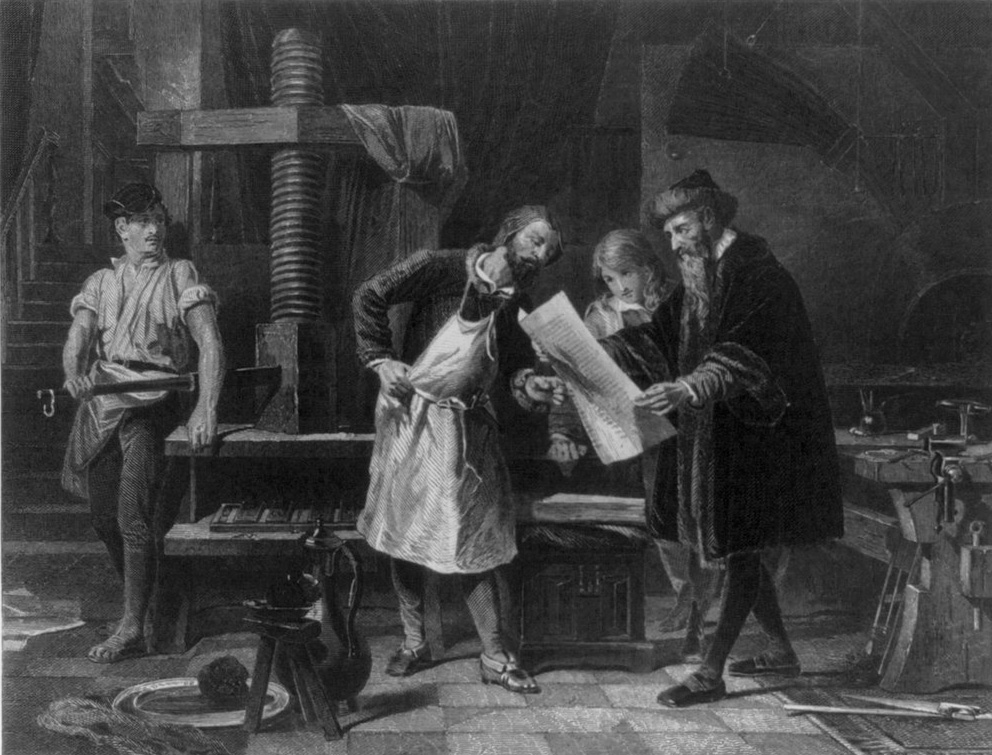
The invention of
the printing press
A revolution in the spread of knowledge: how Gutenberg changed the world.
The turning point of History
The age of scribes
For centuries, books were copied by hand by monks in monasteries. Each work took months or even years to complete. As a result, books were rare, costly and reserved for an elite. Knowledge spread slowly and remained limited.
Gutenberg's innovation
Johannes Gutenberg desarrolló una nueva aleación para los tipos móviles. Reutilizables casi infinitamente, permitían imprimir un texto en pocas horas en lugar de varios meses. Su prensa revolucionó la producción de libros — la famosa Biblia de 42 líneas es el ejemplo fundador.
The knowledge revolution
The printing press spread rapidly across Europe. Within a few decades, millions of books were in circulation. Ideas became more accessible, fuelling the Renaissance, the Reformation and the development of scientific and philosophical thought. The press permanently transformed the spread of knowledge.
« Many will go here and there
to increase knowledge. »
The time Gutenberg spent researching and developing his typography technique.
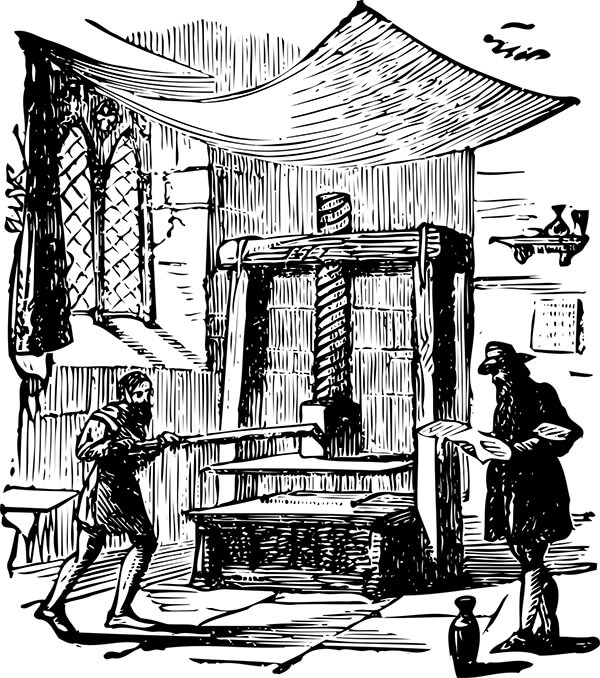
This technique was used without major change for 4 centuries.
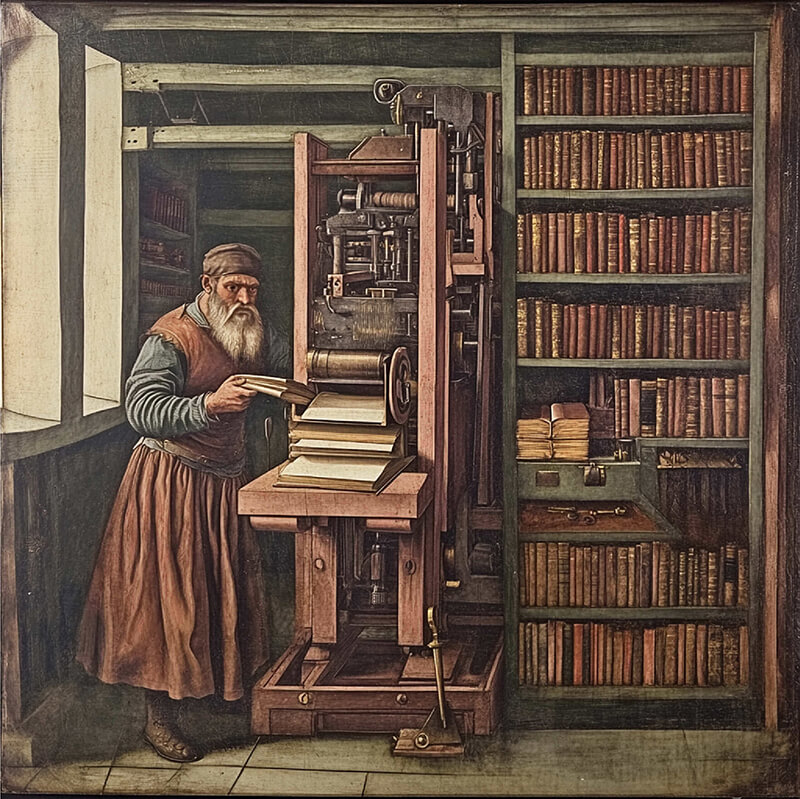
The approximate number of Bibles printed in the very first print run.

The number of lines in the famous Gutenberg Bible.
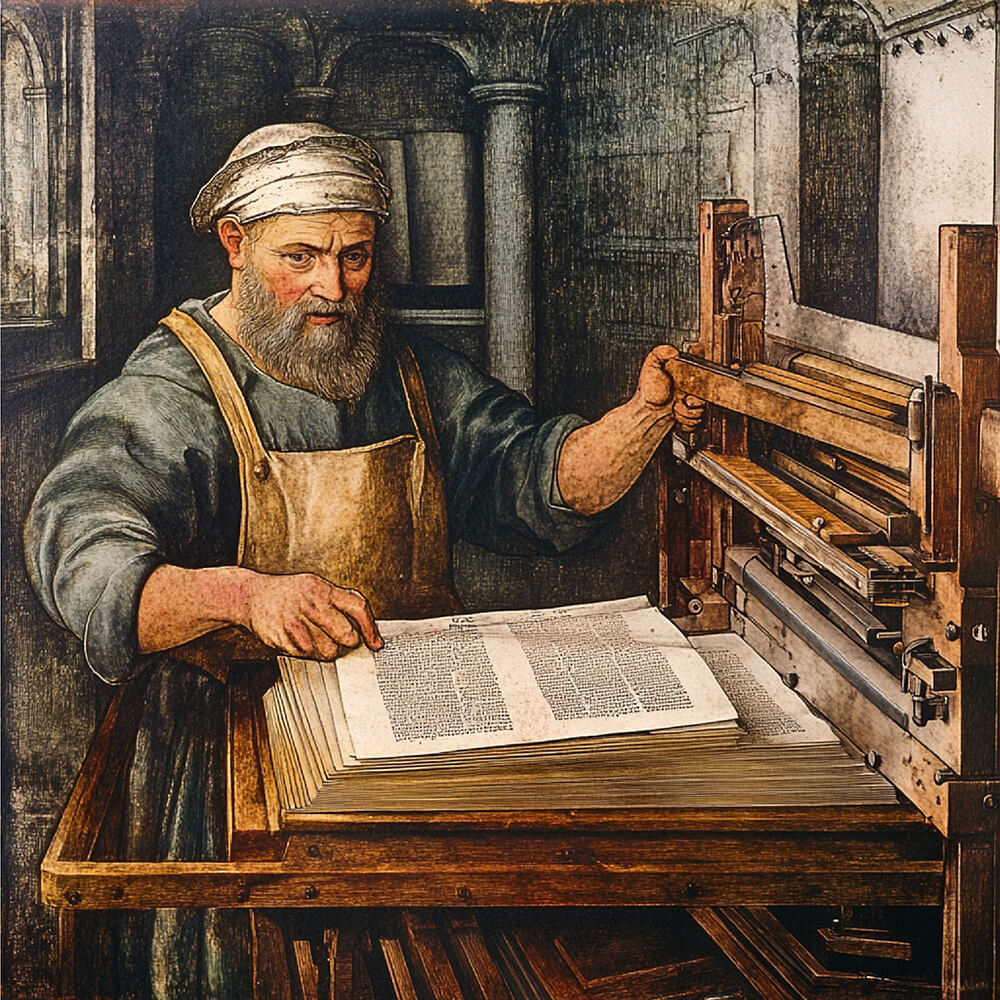
The rapid expansion of the printing press
In less than 30 years, Gutenberg's technology had spread across Europe and the world,
permanently transforming the production and distribution of knowledge.
« For the word of God is alive
and active. »
you are responsible for taking the time to read it!